
Metric O-ring Sizing Chart
Whatever your O-ring sizing requirements may be, Canyon Components can support you! If you can't find the O-ring size you need, or if you require something custom, feel free to get in touch with our engineers.
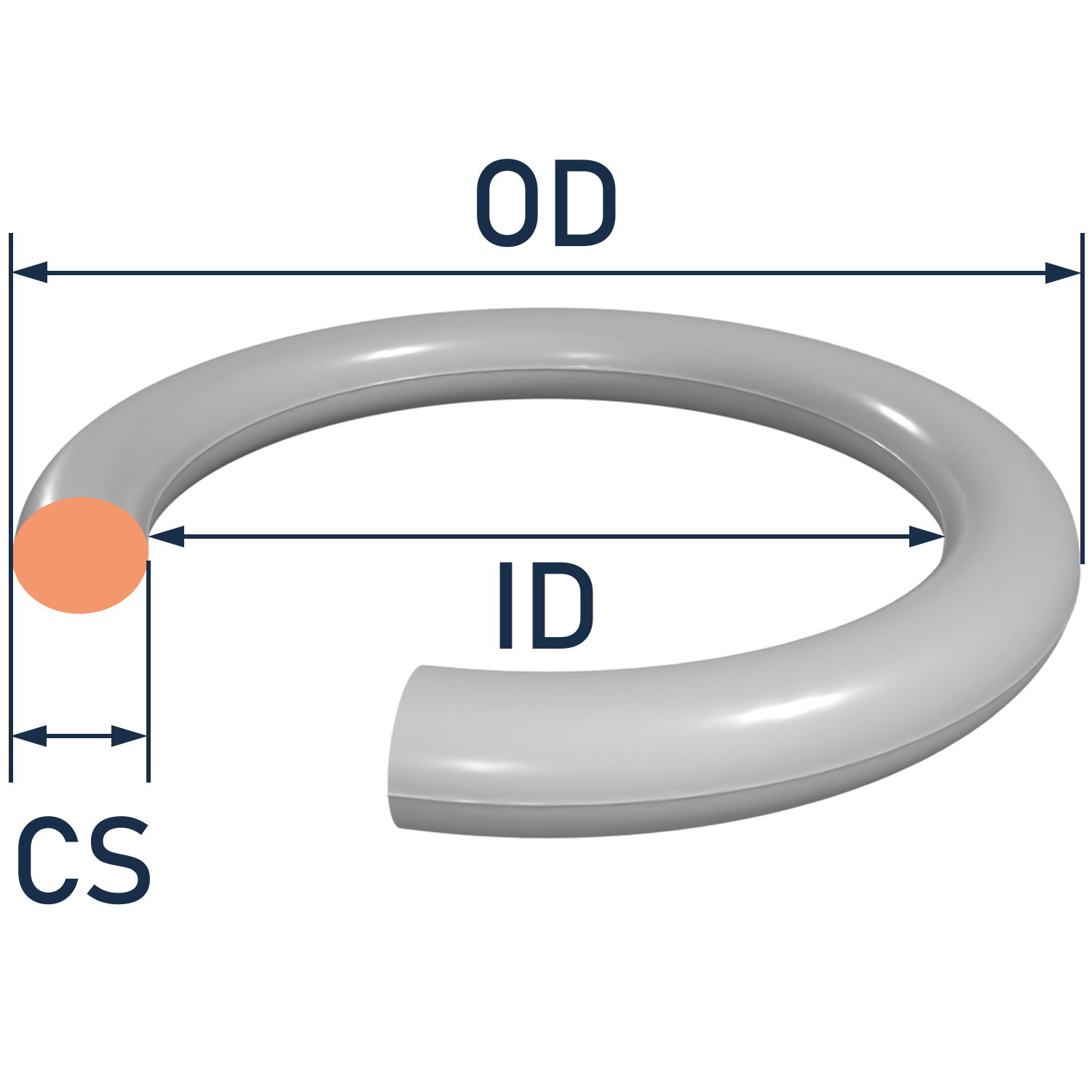
Metric is one of the most common O-ring sizing standards. The purpose of the table below is to define O-ring size identification codes (dash numbers), O-ring cross sections (CS), O-ring inside diameters (ID), and O-ring outside diameters* (OD) for all Metric O-ring sizes.
* Please note that the O-ring outside diameter is typically used as a reference dimension and is not used to define the compliance of a standard Metric O-ring.
Metric O-rings from Canyon Components designed to meet international sealing standards in aerospace, automotive, and industrial systems.
Back to Reference Hub


Metric O-rings are sealing components manufactured using metric dimensions, typically defined by the inside diameter (ID) in millimeters and the cross section (CS) in millimeters. Unlike the AS568 standard used primarily in North America, which identifies O-ring sizes using dash numbers, metric O-rings are specified directly by their physical dimensions. This makes them especially common in equipment manufactured in Europe, Asia, and other international markets.
The difference between metric O-rings and AS568 O-rings is primarily in how sizes are defined and referenced. AS568 O-rings use standardized dash numbers such as -010 or -214, while metric O-rings are usually written in a format such as 20 mm × 2.5 mm, meaning a 20 mm inside diameter with a 2.5 mm cross section. While both systems describe the same type of sealing component, the sizing standards are not always interchangeable.
Metric O-rings are widely used in international machinery, automotive systems, medical devices, chemical processing equipment, and industrial automation systems. Engineers selecting O-rings for global equipment often rely on metric O-ring charts and cross references to ensure the correct rubber O-rings, elastomer seals, and gasket components are chosen for the application.
Metric O-rings can be manufactured from many of the same elastomer materials used for standard O-rings and gasket seals, allowing engineers to select materials that match the chemical, thermal, and mechanical demands of the application. Common elastomers include NBR (Nitrile), EPDM, FKM (Viton), Silicone, Fluorosilicone, and HNBR, each offering different performance characteristics for specific environments.
For applications involving aggressive chemicals, high temperatures, or demanding process environments, perfluoroelastomers (FFKM) such as Kalrez®, Canrez®, and Chemraz® are often used. These materials provide exceptional chemical resistance, low compression set, and high temperature stability, making them ideal for semiconductor manufacturing, pharmaceutical processing, and aerospace systems. In many critical sealing environments, FFKM O-rings are preferred because they can withstand exposure to harsh solvents, acids, and plasma processes that would degrade standard rubber compounds.
Other materials such as PTFE and PTFE encapsulated O-rings may also be used in metric sealing applications where chemical resistance and low friction are required. Engineers often review material datasheets, TDS documentation, test reports, and SDS information to confirm that a specific rubber O-ring or gasket material will perform reliably under the intended operating conditions.
Metric O-rings are widely used in equipment manufactured outside the United States, especially in industries where international standards and global supply chains are common. European and Asian equipment manufacturers often design sealing grooves and components using metric measurements, making metric O-rings the preferred choice for replacement parts and new equipment production.
Industries that frequently rely on metric O-rings, rubber seals, and elastomer gaskets include aerospace systems, automotive manufacturing, robotics, medical devices, pharmaceutical processing equipment, chemical handling systems, and industrial machinery. Many pumps, valves, hydraulic systems, and pneumatic components manufactured in Europe or Asia are designed specifically for metric sealing components.
Because many facilities operate equipment from multiple global manufacturers, engineers often need to manage both AS568 O-ring sizes and metric O-ring standards within the same maintenance program. Having access to reliable metric O-ring sizing charts and cross reference resources helps ensure the correct sealing components are selected when servicing international machinery.
High performance FFKM metric O-rings offer some of the highest levels of chemical resistance available among elastomer sealing materials. These perfluoroelastomer compounds combine the flexibility of rubber with the chemical stability often associated with PTFE based materials. As a result, FFKM O-rings are commonly used in extremely demanding environments where standard rubber compounds would fail.
Materials such as Kalrez®, Canrez®, and Chemraz® FFKM O-rings are designed to resist aggressive chemicals, high temperatures, oxidizing environments, and plasma exposure. These seals are frequently used in industries such as semiconductor fabrication, chemical processing plants, pharmaceutical manufacturing, aerospace propulsion systems, and specialty industrial reactors.
In addition to chemical resistance, FFKM O-rings also provide excellent compression set resistance, low permeability, and long service life. While these materials are typically more expensive than standard elastomers, their durability can significantly reduce downtime and maintenance costs in critical applications where seal failure could cause production interruptions or contamination.
Selecting the correct metric O-ring size requires evaluating both the inside diameter and cross section dimensions of the sealing groove or gland. Engineers typically start by reviewing equipment drawings, manufacturer specifications, or maintenance documentation to determine the required O-ring size. If the original seal is available, measuring the O-ring ID and cross section can also help identify the correct replacement.
Once the size is known, engineers must also select the correct rubber compound or elastomer material for the environment. Factors such as chemical exposure, temperature range, pressure levels, and regulatory requirements all influence material selection. For example, EPDM may be preferred for water and steam systems, while FKM or FFKM may be required for chemical resistance and high temperature sealing.
Metric O-ring selection often involves referencing O-ring sizing charts, compatibility guides, material datasheets, and engineering specifications. By combining dimensional accuracy with proper material selection, engineers can ensure that rubber O-rings and gasket seals provide reliable sealing performance across a wide range of industrial systems.
Yes. Canyon Components supplies a wide range of standard metric O-rings and custom rubber sealing solutions for international equipment. Standard metric sizes are available in numerous elastomer materials including NBR, EPDM, FKM, Silicone, Fluorosilicone, PTFE, and high performance FFKM compounds such as Kalrez®, Canrez®, and Chemraz®.
In addition to standard sizes, custom metric O-rings can be produced for applications requiring special cross sections, non-standard diameters, specialty materials, or unique performance characteristics. Custom molded elastomer seals are often used in advanced equipment where standard O-ring sizes do not meet design requirements.
Canyon Components also assists engineers with material selection, chemical compatibility analysis, sealing design considerations, and international O-ring cross referencing. Whether you require standard metric O-rings, high purity FFKM seals, or custom rubber gasket solutions, working with experienced sealing specialists helps ensure optimal performance in demanding industrial environments.