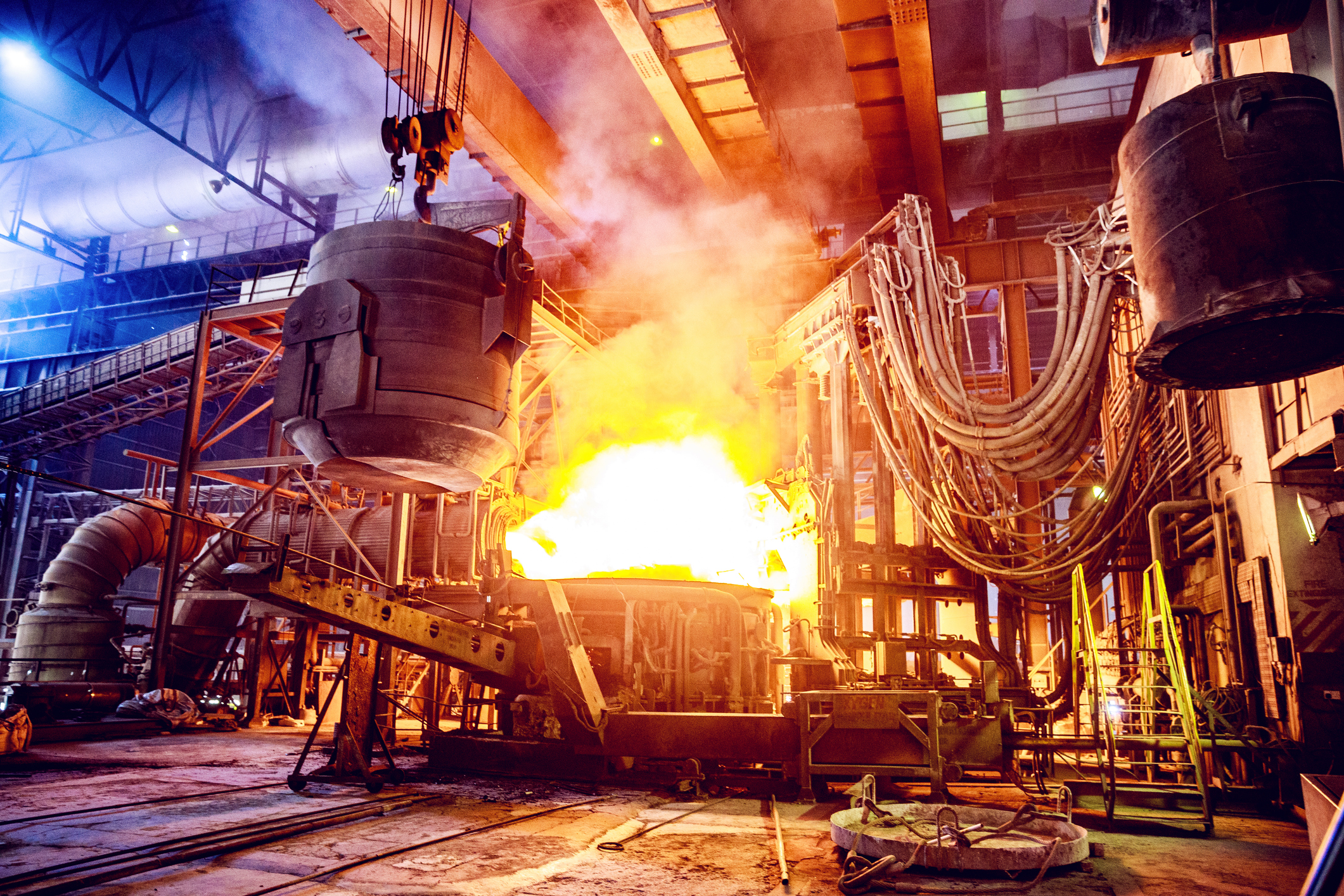
Viton™ FKM for the LNG & CNG Industry
Viton™ FKM fluorocarbon elastomers are engineered for sealing applications in LNG and CNG systems where exposure to hydrocarbons, high pressures, and demanding environmental conditions require materials that go beyond standard elastomers. These materials are commonly supplied in a range of durometers, including higher hardness options, to provide improved extrusion resistance, mechanical strength, and sealing stability in both static and dynamic applications.
Viton™ FKM O-rings, gaskets, and custom molded parts are widely used in LNG and CNG infrastructure including compressors, valves, regulators, and fueling systems. These environments require resistance to natural gas, methane, hydrocarbons, lubricants, and pressure cycling while maintaining sealing performance over long service intervals. Fluorocarbon elastomers are known for excellent resistance to fuels, oils, and hydrocarbons, along with strong performance in ozone, weathering, and aging environments.
The engineers and consultants at Canyon Components work closely with customers to select the optimal Viton™ FKM compound for LNG and CNG service, balancing low temperature performance, pressure resistance, chemical compatibility, and seal design. Contact our expert staff for assistance with Viton™ O-rings, gaskets, and custom molded parts for LNG and CNG applications.
Common names include: FKM (Fluorocarbon), Fluorocarbon Rubber
Trade names include: Viton™, Fluorel®, Technoflon®, Dai-El®
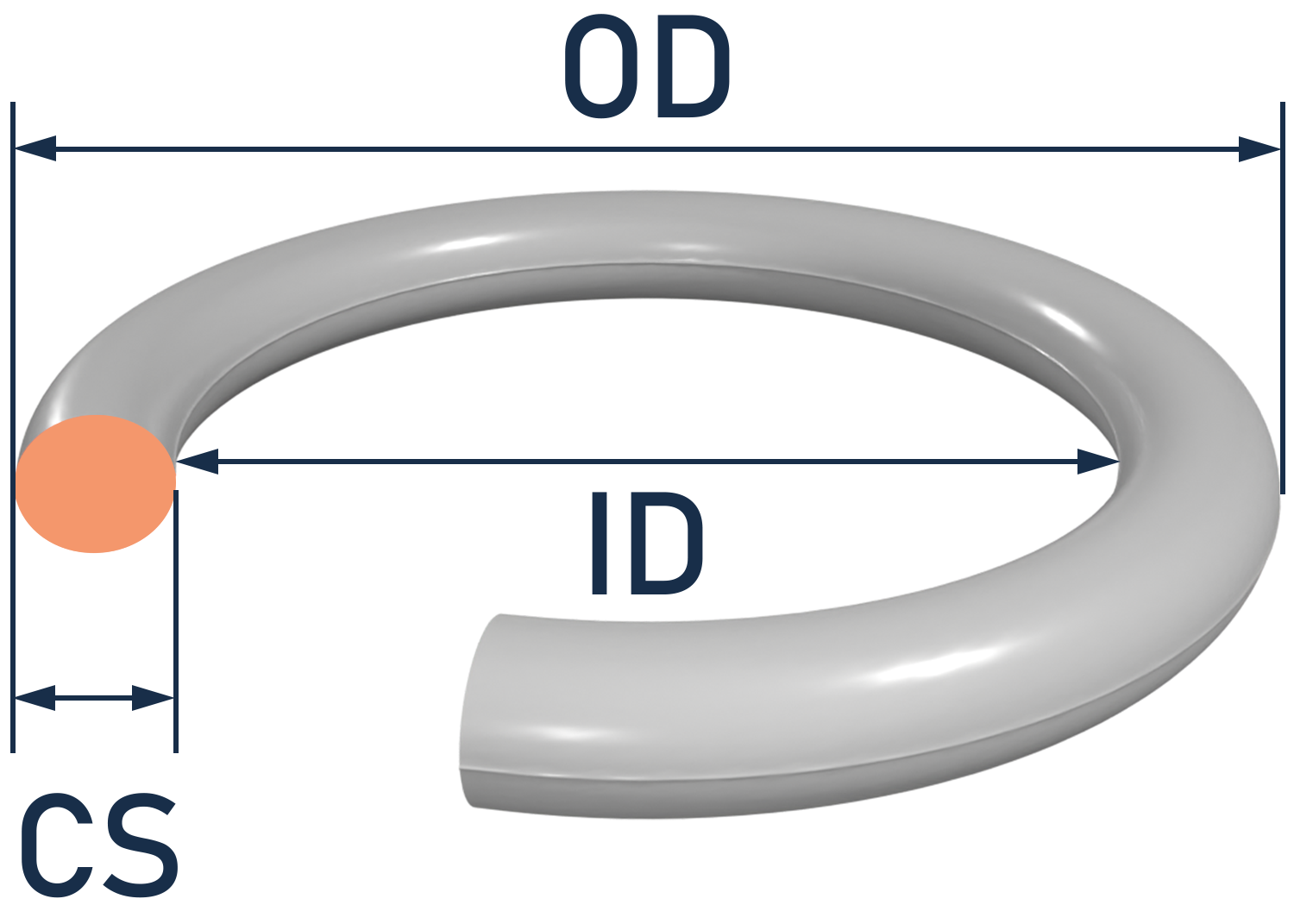
FKM O-rings from Canyon Components providing excellent chemical, heat, and compression resistance in critical sealing applications.
FKM (Viton™) Materials Available for MIL-Spec Service
This table shows many of our standard materials and links out to our O-ring store. Get in touch with us if you need a custom gasket, custom molded part, or non-standard geometry!
Canyon Components stocks Viton® O-rings in AS568, JIS, and Metric sizes with custom molded FKM part options.
Filter by
Material Brand
Durometer
Temperature Search (°C)
Material Compliance
Specification
Size Search
___X____
Features of Viton™ FKM for LNG & CNG
- Viton™ FKM O-rings, gaskets, and custom molded parts provide excellent resistance to natural gas, methane, and hydrocarbon-based media
- Viton™ FKM compounds offer strong resistance to oils, lubricants, and compressor fluids commonly used in LNG and CNG systems
- Viton™ FKM O-rings, gaskets, and custom molded parts maintain sealing integrity under pressure cycling and high-pressure gas environments
- Viton™ FKM compounds exhibit low gas permeability compared to many general-purpose elastomers
- Viton™ FKM O-rings, gaskets, and custom molded parts provide excellent resistance to ozone, weathering, and outdoor environmental exposure
- Viton™ FKM materials are available in higher durometers for improved extrusion resistance in high-pressure sealing applications
- Viton™ FKM O-rings, gaskets, and custom molded parts can be paired with backup rings for enhanced performance in extreme pressure conditions
Limitations of Viton™ FKM for LNG & CNG
- Standard Viton™ FKM O-rings, gaskets, and custom molded parts have limited low-temperature flexibility, which can be a critical factor in LNG applications
- Viton™ FKM compounds are generally not suitable for cryogenic temperatures associated with LNG storage and transport without specialty formulations
- Depending on the blend, Viton™ FKM materials are not recommended for strong amines, ketones, or highly polar solvents
- Viton™ FKM O-rings, gaskets, and custom molded parts are not compatible with ammonia gas or strong inorganic bases
- For extreme low-temperature service, alternative materials such as PTFE, specialized FKM blends, or other engineered solutions may be required
Please consult a Canyon Components Engineer about your specific application and we will use our decades of experience to formulate a solution that fits your need.
FKM & Viton™ High Performance Polymer Types
There are many types of FKM Polymer Types that Canyon Components offers.
This includes FKM Types A, B, F, GLT, GFLT, XLT, ULT, ETP, & TBR.
The table below is a Viton™ selection guide that lays out the pluses and minuses of each variation.
Key: 1 = Excellent 2 = Good 3 = Poor 4 = Not Recommended
| Types of FKM | A | GF | GLT | GLT ED | GFLT | XLT | ETP | |||||||
|---|---|---|---|---|---|---|---|---|---|---|---|---|---|---|
| Canyon Compound Number | VT75BK00 | VT75BK20 | VT75BK30 | VT90BK31 | VT75BK40 | VT75BK50 | VT75BK60 | |||||||
| Description | General Purpose | General Purpose High Fluorine |
Low Temp | Low Temp Resistant to Explosive Decompression |
Low Temp High Fluorine |
Extreme Low Temp High Fluorine |
Viton® Extreme High Fluorine FEPM |
|||||||
| Cure Type | Bisphenol | Peroxide | Peroxide | Peroxide | Peroxide | Peroxide | Peroxide | |||||||
| Typical Fluorine Content | 66 | 69.5 | 64 | 64 | 66.5 | 66.5 | 67 | |||||||
| Typical High Temp Range °F (°C) | 437 (225) | 437 (225) | 437 (225) | 437 (225) | 437 (225) | 437 (225) | 437 (225) | |||||||
| Typical Low Temp Range °F (°C) | -15 (-26) | -15 (-26) | -40 (-40) | -40 (-40) | -35 (-37) | -54 (-48) | -6 (-21) | |||||||
| TR-10 °F (°C) | 1 (-17) | -6 (-21) | -22 (-30) | -22 (-30) | -11 (-24) | -40 (-40) | 12 (-11) | |||||||
| Oxygenated Automotive Fuels (containing MeOH, EtOH, MTBE, etc.) | 4 | 1 | 4 | 4 | 1 | 1 | 1 | |||||||
| Reciprocating Engine Lubricating Oils (SE-SF Grades) | 2 | 1 | 1 | 1 | 1 | 1 | 1 | |||||||
| Aliphatic Hydrocarbon Process Fluids,Chemicals | 1 | 1 | 1 | 1 | 1 | 1 | 1 | |||||||
| Aromatic Hydrocarbon Process Fluids, | 1 | 1 | 2 | 2 | 1 | 1 | 1 | |||||||
| Aqueous Fluids: Water, Steam, Mineral Acids (H2SO4, HNO3, HCl, etc.) | 3 | 1 | 1 | 1 | 1 | 1 | 1 | |||||||
| Amines, High pH Caustics | 4 | 4 | 4 | 4 | 4 | 4 | 1 |
Please consult a Canyon Components Engineer about your specific application and we will use our decades of experience to formulate a solution that fits your need.
What Are LNG & CNG Elastomer Materials?
LNG and CNG elastomer materials are sealing compounds engineered for use in natural gas systems where exposure to methane, hydrocarbons, high pressures, and wide temperature ranges requires reliable long-term performance. These materials are used in O-rings, gaskets, diaphragms, and custom molded components that must maintain sealing integrity in compressors, valves, regulators, storage systems, and fueling equipment.
In CNG applications, elastomers are typically exposed to high-pressure compressed gas, lubricants, and outdoor environments. In LNG applications, materials may also encounter extremely low temperatures during storage and transport, making material selection more critical. While Viton™ FKM performs well in hydrocarbon-rich environments, its use in LNG systems is generally limited to non-cryogenic zones unless specialty low-temperature formulations are specified.
Common Considerations for LNG & CNG Elastomers
- Temperature Range: Materials must handle both elevated temperatures from compression and potential low temperatures in LNG systems, especially near cryogenic conditions
- Pressure Resistance: High-pressure sealing requires materials with sufficient hardness, modulus, and extrusion resistance, often combined with backup rings
- Gas Permeation: Low permeability is critical to minimize leakage of methane and other gases over time
- Chemical Compatibility: Elastomers must resist hydrocarbons, compressor oils, additives, and contaminants present in gas systems
- Decompression Resistance: Rapid gas decompression can cause internal damage, so materials should be selected for resistance to explosive decompression (AED or RGD)
- Dynamic Performance: Components such as diaphragms and seals must withstand pressure cycling, flexing, and vibration without premature failure
- Environmental Exposure: Outdoor LNG and CNG systems require resistance to ozone, UV exposure, moisture, and weathering
- Material Stability: Long-term sealing performance depends on resistance to compression set, swelling, shrinkage, and aging
Key Standards for Viton™ in the LNG & CNG Industry
- NACE and ISO Standards for Sour Gas Service: Standards such as NACE and ISO are commonly used to evaluate elastomer performance in environments containing H2S, CO2, and hydrocarbons. Viton™ FKM compounds may be selected for compatibility with these conditions depending on formulation
- NORSOK M-710: NORSOK M-710 is widely referenced for elastomer qualification in oil and gas applications, including resistance to explosive decompression, rapid gas decompression, and harsh chemical environments. Many Viton™ compounds are tested to these requirements for high-pressure gas service
- ASTM D2000 Classification System: ASTM D2000 provides a framework for defining elastomer properties such as heat resistance, oil resistance, tensile strength, and hardness. This standard is commonly used to specify and compare FKM materials used in LNG and CNG sealing applications
- Explosive Decompression (AED / RGD) Testing: LNG and CNG elastomers are often evaluated for resistance to rapid gas decompression, which can cause blistering or cracking in seals under high-pressure gas service
- Material Testing and Documentation: LNG and CNG applications often require supporting documentation such as Datasheets, TDS, Test Reports, MTRs, MSDS, and SDS to verify material performance and traceability
LNG, CNG, Oil Field & High Pressure

API 6A Materials
Discover API 6A materials for oil and gas, ensuring compliance and reliable performance in extreme conditions.

NORSOK M-710 Materials
Explore NORSOK M-710 anti-explosive decompression materials for oil and gas, ensuring reliability and compliance in harsh environments.

NACE TM0297 Materials
Discover NACE TM0297 anti-explosive decompression materials for sour gas applications, ensuring corrosion resistance, durability, and compliance.
LNG & CNG Materials Available
Click here to see some of our most commonly served industries!
Canyon Components supports oil and gas customers with material selection, compound qualification, and custom sealing solutions designed for the most demanding environments. Whether your application requires a Viton™ compound qualified to NORSOK, NACE, or API 6A—or an alternative elastomer for specialized service—our engineering team is ready to help you design the right solution.
Canyon Components strives to meet all customer service requests. Feel free to contact Canyon Components engineering and let our knowledgeable staff help you design the perfect part for your needs.
Canrez® FFKM Perfluoroelastomer
Extreme temperatures and aggressive chemicals require extreme solutions. CanRez™ FFKM O‑rings, gaskets, and custom molded parts provide exceptional resistance to heat, sour gas, and aggressive chemicals where standard FKM materials may not perform.
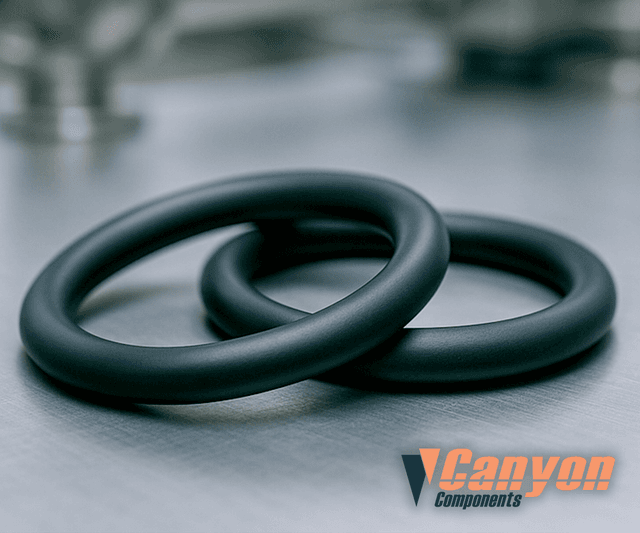
Aflas® (TFE/P)
AFLAS® elastomers provide superior resistance to amines, bases, and sour gas environments where standard FKM compounds may be limited.
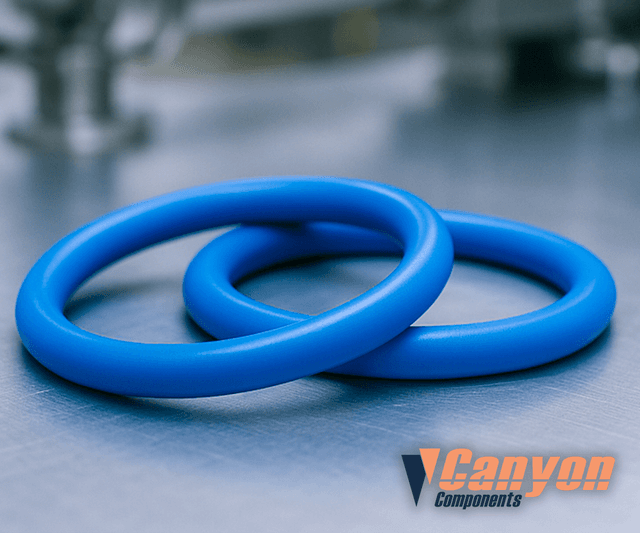
Fluorosilicone (FVMQ)
Fluorosilicone O‑rings and gaskets combine low‑temperature flexibility with improved fuel resistance, making them suitable for specialized oil and gas sealing environments depending on the pressure of the application.
EPDM (Ethylene Propylene)
Certain EPDM compounds are used in oil and gas applications where steam resistance, water compatibility, or specific chemical resistance is required.
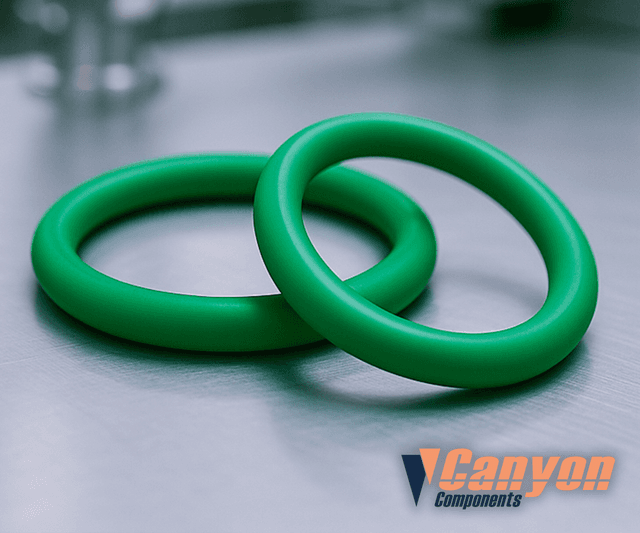
HNBR (Hydrogenated Nitrile)
HNBR O‑rings, gaskets, and custom molded parts offer excellent mechanical strength, oil resistance, and outstanding AED/RGD performance, making them a popular choice for high‑pressure oil and gas applications.
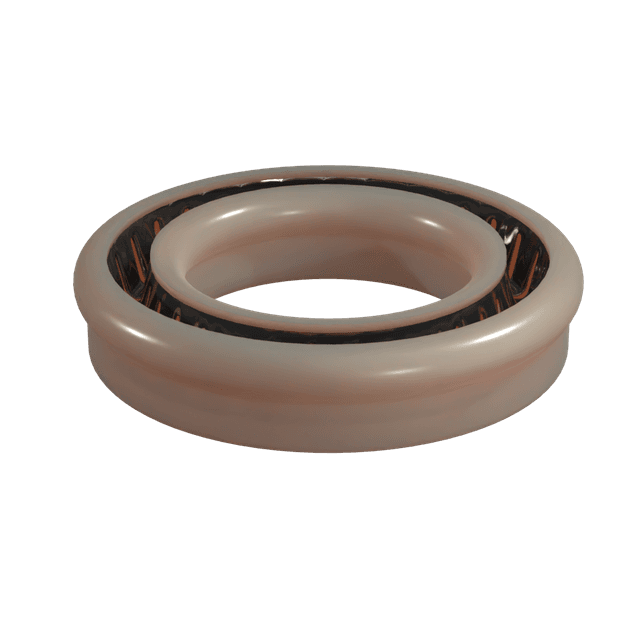
Spring Energized Seal (SES)
The harshest environments require specialized solutions. Often times, a Canyon Components Spring Energized Seal (SES) will be needed. SES are typically formatted in a multi-piece assembly consisting of a polymeric sealing component that is wrapped around a spring energizer.
Please consult a Canyon Components Engineer about your specific application and we will use our decades of experience to formulate a solution that fits your need.
All Other FKM (Viton™) Types Available
Viton™ Type A – General Purpose FKM
Viton™ Type A FKM O-rings, gaskets, and custom molded parts provide balanced heat and chemical resistance. This general purpose fluorocarbon elastomer is widely used in industrial sealing applications involving fuels, oils, and hydrocarbons.
Viton™ Type B – Improved Chemical Resistance FKM
Viton™ Type B FKM offers enhanced resistance to aggressive fuels, aromatics, and chemical blends compared to Type A. This high-fluorine fluorocarbon elastomer is commonly specified in demanding fuel systems.
Viton™ Type F – Improved Chemical Resistance FKM
Viton™ Type F FKM provides superior resistance to oxygenated fuels, solvents, and aggressive chemical environments. This fluorocarbon elastomer is frequently used in automotive and industrial fuel sealing applications.
Viton™ Type GF – High Fluorine FKM
Viton™ Type GF FKM features increased fluorine content for improved resistance to fuels, biodiesel, and harsh chemicals while maintaining strong mechanical properties and sealing reliability.
Viton™ Type GLT – Low Temperature FKM
Viton™ Type GLT FKM delivers improved low-temperature flexibility compared to standard fluorocarbon elastomers, supporting sealing performance in colder climates without sacrificing chemical resistance.
Viton™ Type GFLT – Low Temperature and Chemical Resistant FKM
Viton™ Type GFLT FKM combines enhanced low-temperature flexibility with improved resistance to aggressive fuels and chemical blends, making it suitable for demanding fluorocarbon sealing applications.
Viton™ Type ETP – Specialty Chemical Resistant FKM
Viton™ Type ETP FKM provides exceptional resistance to aggressive chemicals, steam, and amines. This specialty fluorocarbon elastomer is often used in oil, gas, and chemical processing systems.
Viton™ Type ULT – Ultra Low Temperature FKM
Viton™ Type ULT FKM is engineered for ultra-low temperature environments while maintaining fluorocarbon chemical resistance, making it suitable for extreme cold industrial and aerospace sealing systems.
Viton™ Type XLT – Extreme Low Temperature FKM
Viton™ Type XLT FKM extends low-temperature sealing capability beyond GLT grades, offering reliable fluorocarbon elastomer performance in severe cold and aerospace environments.
Back to Industries Hub